MONTEPULCIANO
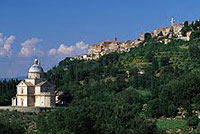 Montepulciano presents the characteristic aspect of its origins as a mediaeval urban centre: perched on a hill that rises between the Valdichiana and the Val d'Orcia, it clings to the traditional Tuscan houses of stone and brick.
Legend has it that Montepulciano was founded by the mythical Etruscan King Porsenna. It's more likely, however, that it originated as the property of the Roman "Gens Publicii", from which it would have derived its name "Monte Publiciano".
Montepulciano became a municipality at the beginning of the 14th century. For a long time it was contested between Siena and Florence, but was finally established as part of the Medici seigneury in 1511. This period of Montepulciano's history is studded with internal struggles between the noble families who strove to gain local power.
But these families also have the distinction of having made Montepulciano a city that could compete with Siena and even Florence in the grandeur of its public and private buildings. Montepulciano today is almost identical to what it was four hundred years ago. Its palazzi and narrow streets form an historic centre in which time seems to have stood still, leaving the beauty and majesty of the Renaissance buildings intact.
The works of Antonio Sangallo the Elder, Andrea Pozzo, Vignola and Michelozzo alternate with each other on an itinerary that starts at the lowest gate and ascends through the town to reach the Piazza Grande. In the Piazza are the Palazzo Comunale designed by Michelozzo, the Palazzo Contucci and Palazzo Nobili-Taurgi of Sangallo, the distinctive "Pozzo dei Grifi e dei Leoni" (the well of the gryphons and lions), and the cathedral, which houses the triptych of Taddeo di Bartolo.
The primary cultural initiative is the "Cantiere Internazionale d'Arte", a summer arts festival that is primarily musical but also provides a venue for drama, dance and figurative arts.
Another important event is the "Bruscello", the performance of a folk tale in the old style of country theatre.
The "Bravio delle Botti" on the other hand, evokes the mediaeval history of Montepulciano in a challenge between the eight "contrade" (guilds) that have divided the town since 1337.
TOP
CHIANCIANO TERME
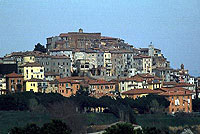 Chianciano was a major, Etruscan-Roman centre, mostly due to the healing properties
of its hot springs, as the evidence found in the nearby thermal centre of "Mezzomiglio"
proves.
Today Chianciano Terme is one of the most famous and important mineral springs in
Italy. There is a large number of archaeological Etruscan and Roman relics of major
importance on display at the Civic Archaeological Museum "Delle Acque".
The modern Thermal Spa is situated right next to the old Medieval centre of Chianciano,
which offers a number of treasures of Romanesque and Renaissance art. Some of these
treasures, such as the Sienese and Florentine paintings by the followers of Duccio di
Buoninsegna and Arnolfo di Cambio, are on display at the Museum of Sacred Art in the
Dean's Palace. Chianciano is at an altitude of about 550 m above sea level. It's nestled
within woods of oak, beech, holly and chestnut between the Valdichiana and the Val
d'Orcia valley. Apart from the beautiful sceneries of the countryside, the two valleys are
surrounded by a number of picturesque ramparts, castles, fortresses and abbeys. The
famous mineral springs are crowned by the completely uncontaminated environment.
Chianciano was a major, Etruscan-Roman centre, mostly due to the healing properties
of its hot springs, as the evidence found in the nearby thermal centre of "Mezzomiglio"
proves.
Today Chianciano Terme is one of the most famous and important mineral springs in
Italy. There is a large number of archaeological Etruscan and Roman relics of major
importance on display at the Civic Archaeological Museum "Delle Acque".
The modern Thermal Spa is situated right next to the old Medieval centre of Chianciano,
which offers a number of treasures of Romanesque and Renaissance art. Some of these
treasures, such as the Sienese and Florentine paintings by the followers of Duccio di
Buoninsegna and Arnolfo di Cambio, are on display at the Museum of Sacred Art in the
Dean's Palace. Chianciano is at an altitude of about 550 m above sea level. It's nestled
within woods of oak, beech, holly and chestnut between the Valdichiana and the Val
d'Orcia valley. Apart from the beautiful sceneries of the countryside, the two valleys are
surrounded by a number of picturesque ramparts, castles, fortresses and abbeys. The
famous mineral springs are crowned by the completely uncontaminated environment.
TOP
CETONA
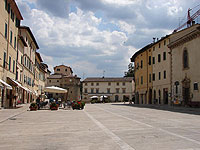 Situated on top of Cetona Mountain, Cetona has the typical structure of a medieval
settlement. Its lanes and streets twist and turn up towards the fortress. Belvedere, a
40,000-year-old prehistoric settlement nearby, is well worth a visit.
Monte Cetona Civic Museum of Prehistory, which has finds dating from the Paleolithic
era to the Bronze Age, is particularly interesting.
In the parish church of San Michele Arcangelo (Saint Michael the Archangel) (1155 A.D.)
it is possible to admire frescoes from the Sienese school of Cola Petruccioli. The church
of the Santa Trinità (the Holy Trinity) houses a cycle of frescoes by Pinturicchio.
While having developed its tourist sector during the latest years, the local economy is
still very much based on agriculture and farming. Some of the best local products are
olive oil, wine, cheeses and cured meats.
The local cuisine, rooted in the classical Tuscan tradition, is not to be missed.
Situated on top of Cetona Mountain, Cetona has the typical structure of a medieval
settlement. Its lanes and streets twist and turn up towards the fortress. Belvedere, a
40,000-year-old prehistoric settlement nearby, is well worth a visit.
Monte Cetona Civic Museum of Prehistory, which has finds dating from the Paleolithic
era to the Bronze Age, is particularly interesting.
In the parish church of San Michele Arcangelo (Saint Michael the Archangel) (1155 A.D.)
it is possible to admire frescoes from the Sienese school of Cola Petruccioli. The church
of the Santa Trinità (the Holy Trinity) houses a cycle of frescoes by Pinturicchio.
While having developed its tourist sector during the latest years, the local economy is
still very much based on agriculture and farming. Some of the best local products are
olive oil, wine, cheeses and cured meats.
The local cuisine, rooted in the classical Tuscan tradition, is not to be missed.
TOP
CHIUSI
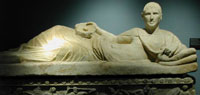 Chiusi, which was already a major city in the Etruscan era, had its most prosperous
period during the time of the legendary King Porsenna. Significant relics from the
nearby archaeological sites are on display at the
National Museum of Etruscan Archaeology. Facing the museum is the cathedral, which predated the 12th century
and was renovated in 1585. Next to the cathedral is the Cathedral Museum. Built in
the 30's, the Museum houses a number of important archeological relics including
precious, illuminated missals. Over time, several Etruscan tombs have been discovered
in the region - the Pellegrina, the Scimmia (monkey), the Leone (lion), the Pania and
many others. Christianity spread quickly in this area; evidence of it can be found in
the Catacombs of Santa Mustiola and Santa Catarina (Saint Catherine). In addition to
the catacombs there is the so-called "labyrinth
of Porsenna", an intricate system of
underground tunnels leading to a cistern that dates from the 1st. century A.D. Because
of such attractions, Chiusi has developed a growing tourist sector. Situated below
the town, Lake Chiusi is one of the main natural attractions – the water reflects the
surrounding hills creating a unique view in front of which one can spend a whole day
fishing or bird watching.
Chiusi, which was already a major city in the Etruscan era, had its most prosperous
period during the time of the legendary King Porsenna. Significant relics from the
nearby archaeological sites are on display at the
National Museum of Etruscan Archaeology. Facing the museum is the cathedral, which predated the 12th century
and was renovated in 1585. Next to the cathedral is the Cathedral Museum. Built in
the 30's, the Museum houses a number of important archeological relics including
precious, illuminated missals. Over time, several Etruscan tombs have been discovered
in the region - the Pellegrina, the Scimmia (monkey), the Leone (lion), the Pania and
many others. Christianity spread quickly in this area; evidence of it can be found in
the Catacombs of Santa Mustiola and Santa Catarina (Saint Catherine). In addition to
the catacombs there is the so-called "labyrinth
of Porsenna", an intricate system of
underground tunnels leading to a cistern that dates from the 1st. century A.D. Because
of such attractions, Chiusi has developed a growing tourist sector. Situated below
the town, Lake Chiusi is one of the main natural attractions – the water reflects the
surrounding hills creating a unique view in front of which one can spend a whole day
fishing or bird watching.
TOP
PIENZA
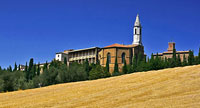 Originally called "Castello di Corsignano", Pienza took its name from Pope Pius II
Piccolomini, who in the second half of the 15th century initiated a restoration that was
meant to create an "ideal city". The village itself is an absolute gem, and the Cathedral
in particular is breathtaking. It houses masterpieces by Giovanni di Paolo, Matteo
di Giovanni del Vecchietta and Sano di Pietro. There's also a marble altar attributed
to Rossellino, the architect who was in charge of redesigning the town. Next to the
cathedral is the Diocesan Museum, where paintings from the school of Sodoma and
Sano di Pietro, as well as 15th and 16th century Flemish tapestries are on display.
A short distance away is the beautiful Palazzo Piccolomini, designed by Bronzino
and Beccafumi. The town overlooks the breathtaking countryside of the "Natural,
Artistic and Cultural Park of the Val d'Orcia" with its ravines, rolling fields and famous
cretaceous ridges.
Originally called "Castello di Corsignano", Pienza took its name from Pope Pius II
Piccolomini, who in the second half of the 15th century initiated a restoration that was
meant to create an "ideal city". The village itself is an absolute gem, and the Cathedral
in particular is breathtaking. It houses masterpieces by Giovanni di Paolo, Matteo
di Giovanni del Vecchietta and Sano di Pietro. There's also a marble altar attributed
to Rossellino, the architect who was in charge of redesigning the town. Next to the
cathedral is the Diocesan Museum, where paintings from the school of Sodoma and
Sano di Pietro, as well as 15th and 16th century Flemish tapestries are on display.
A short distance away is the beautiful Palazzo Piccolomini, designed by Bronzino
and Beccafumi. The town overlooks the breathtaking countryside of the "Natural,
Artistic and Cultural Park of the Val d'Orcia" with its ravines, rolling fields and famous
cretaceous ridges.
TOP
SAN CASCIANO dei BAGNI
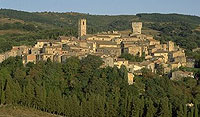 This small village is situated in the southern part of the province of Siena, in the
region that borders Umbria and Lazio. A place of some renown in the Middle Ages, San
Casciano still preserves the aspect of a typical mediaeval village, dominated by the
massive square tower of Palazzo Bologna. Its historic centre is not to be missed, with
the narrow streets, alleyways and little piazzas that are characteristic of a hilly village.
The 11th century Basilican Church, located outside the centre and near the hot springs,
is well worth a visit. San Casciano, nestled in an unspoiled natural area, is one of the
main touristic destinations for those who are looking for thermal therapies such as
inhalation therapy, hot spring baths and mud therapies. The tiny hamlet of Celle sul
Rigo, dominated by a majestic 13th century tower and with an unforgettable panorama,
is only a few kilometers away.
This small village is situated in the southern part of the province of Siena, in the
region that borders Umbria and Lazio. A place of some renown in the Middle Ages, San
Casciano still preserves the aspect of a typical mediaeval village, dominated by the
massive square tower of Palazzo Bologna. Its historic centre is not to be missed, with
the narrow streets, alleyways and little piazzas that are characteristic of a hilly village.
The 11th century Basilican Church, located outside the centre and near the hot springs,
is well worth a visit. San Casciano, nestled in an unspoiled natural area, is one of the
main touristic destinations for those who are looking for thermal therapies such as
inhalation therapy, hot spring baths and mud therapies. The tiny hamlet of Celle sul
Rigo, dominated by a majestic 13th century tower and with an unforgettable panorama,
is only a few kilometers away.
TOP
SARTEANO
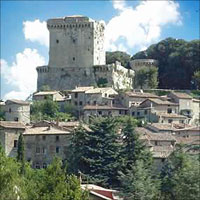 Located on a ridge that rises above the Valdichiana, Sarteano's mediaeval origins are
evident: the majestic square donjon of its 10th century castle is of unique beauty.
Sarteano also has a number of municipal and ecclesiastical buildings of great historical
importance. Visits to the church of San Martino in Foro, and the Collegiata (Collegiate
Church), which is dedicated to Saints Lorenzo and Appollinare and houses a number
of valuable works of art are particularly recommended. Among the municipal buildings
of note are the Palazzo Comunale (the Municipal Hall), the Palazzo Piccolomini, the
Palazzo Goti-Fanelli and the Palazzo Cennini. Another little gem is the theatre, Teatro
degli Arrischianti. The Civic Museum of Archaeology houses a number of important
Etruscan and Roman finds and is definitely worth a visit. The "Giostra del Saracino"
takes place every year on "Ferragosto" (the 15th of August). The "Giostra" is an exciting
jousting match that originated in the Middle Ages. A few kilometres from the centre,
through dense and pristine woods, one arrives at the fortified Abbey of Spineto and the
mediaeval village of Castiglioncello del Trinoro.
Located on a ridge that rises above the Valdichiana, Sarteano's mediaeval origins are
evident: the majestic square donjon of its 10th century castle is of unique beauty.
Sarteano also has a number of municipal and ecclesiastical buildings of great historical
importance. Visits to the church of San Martino in Foro, and the Collegiata (Collegiate
Church), which is dedicated to Saints Lorenzo and Appollinare and houses a number
of valuable works of art are particularly recommended. Among the municipal buildings
of note are the Palazzo Comunale (the Municipal Hall), the Palazzo Piccolomini, the
Palazzo Goti-Fanelli and the Palazzo Cennini. Another little gem is the theatre, Teatro
degli Arrischianti. The Civic Museum of Archaeology houses a number of important
Etruscan and Roman finds and is definitely worth a visit. The "Giostra del Saracino"
takes place every year on "Ferragosto" (the 15th of August). The "Giostra" is an exciting
jousting match that originated in the Middle Ages. A few kilometres from the centre,
through dense and pristine woods, one arrives at the fortified Abbey of Spineto and the
mediaeval village of Castiglioncello del Trinoro.
TOP
MONTEFOLLONICO
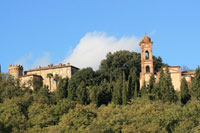 Montefollonico (575 m above sea level) is a small, mediaeval village that has its
roots in the historic rivalry between the republics of Siena and Florence. In fact, the
village was once a Sienese stronghold against the "Florentine" Montepulciano. The first
indications of human settlement in the area date from the Neanderthal period (roughly
60,000 years ago), as evidenced by stone tools found in the locality known as "Il Tondo"
(presently a public garden). There is evidence of a territorial dispute in the year 715
for possession of the parish of San Valentino (Saint Valentine). The history of the
village as it is today begins in the 13th century with the founding of the Parish of San
Leonardo (Saint Leonard) by Cistercian Monks of the nearby monastery. The monks'
main activities were wool milling or fulling, from which the village took its name: Mons
a Fullonica. After years of alternating successions, Montefollonico was incorporated into
the Grand Duchy of Tuscany in 1555.
Montefollonico (575 m above sea level) is a small, mediaeval village that has its
roots in the historic rivalry between the republics of Siena and Florence. In fact, the
village was once a Sienese stronghold against the "Florentine" Montepulciano. The first
indications of human settlement in the area date from the Neanderthal period (roughly
60,000 years ago), as evidenced by stone tools found in the locality known as "Il Tondo"
(presently a public garden). There is evidence of a territorial dispute in the year 715
for possession of the parish of San Valentino (Saint Valentine). The history of the
village as it is today begins in the 13th century with the founding of the Parish of San
Leonardo (Saint Leonard) by Cistercian Monks of the nearby monastery. The monks'
main activities were wool milling or fulling, from which the village took its name: Mons
a Fullonica. After years of alternating successions, Montefollonico was incorporated into
the Grand Duchy of Tuscany in 1555.
TOP
RADICOFANI
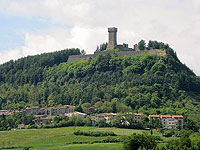 The Val d'Orcia is dominated by a solitary fortress d'Orcia is dominated by a solitary fortress surrounded by the ruins of an
historic castle. Radicofani was an important outpost on the border with the Roman state.
The fortifications, built on orders of Cosimo I, were destroyed by the explosion of a
powder warehouse in 1735. Radicofani is famous fbecause of the bandit Ghino di Tacco,
who lived in this area for many years. The church of San Pietro (Saint Peter) houses
ceramics by Luca della Robbia. The church of Sant'Agata (Saint Agatha), built in Gothic-
Sienese style, is of particular interest. The striking, 16th century Post building with its
double-arcaded façade in Via Francigena is particularly picturesque. A number of famous
personalities spent several time here, including Chateaubriand, Dickens and Montaigne.
The latter was a connoisseur of good food with a particular appreciation for the use of
olive oil in various dishes. In his writings he often recalled the warmth and hospitality of
Tuscany.
The Val d'Orcia is dominated by a solitary fortress d'Orcia is dominated by a solitary fortress surrounded by the ruins of an
historic castle. Radicofani was an important outpost on the border with the Roman state.
The fortifications, built on orders of Cosimo I, were destroyed by the explosion of a
powder warehouse in 1735. Radicofani is famous fbecause of the bandit Ghino di Tacco,
who lived in this area for many years. The church of San Pietro (Saint Peter) houses
ceramics by Luca della Robbia. The church of Sant'Agata (Saint Agatha), built in Gothic-
Sienese style, is of particular interest. The striking, 16th century Post building with its
double-arcaded façade in Via Francigena is particularly picturesque. A number of famous
personalities spent several time here, including Chateaubriand, Dickens and Montaigne.
The latter was a connoisseur of good food with a particular appreciation for the use of
olive oil in various dishes. In his writings he often recalled the warmth and hospitality of
Tuscany.
TOP
SAN QUIRICO
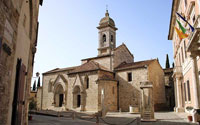 Of Etruscan origin, San Quirico gained importance thanks to the nearby Via Franchigena.
In 1154, Federico Barbarossa met the ambassadors of Pope Adriano IV and this event
is still celebrated the third Sunday in June with the "Feast of Barbarossa". In 1167 it
was the seat of the Imperial Vicariate. In 1559 Florence acquired the village under
Cosimo I de Medici. The Collegial Church of Saints Quirico and Giuditta was built in
Romanesque style; It has three portals: the southern one is attributed to Giovanni
Pisanu. Inside there is an altarpiece by Sano di Pietro and a choir that dates from 1432-
1502. Palazzo Chigi dates from the 17th century. The "Horti Leonini" garden (16th
century) is one of the first examples of an Italian-style garden. From August to October
the garden hosts an exhibition of sculptures entitled "Forma nel Verde" (Form in the
Green). The Romanesque church, Santa Maria Assunta (Saint Mary of the Assumption),
is said to have been constructed on the ruins of a pre-Christian temple. The church
of San Francesco (Saint Francis) houses two wooden, polychrome statues and a
Madonna attributed to della Robbia. The nearby hamlet of BAGNO VIGNONI has been
famous since the Roman times for its healing waters, which spring from the earth at a
temperature of over 50 C and collect in the vast pool at the centre of the village creating
a striking effect. In the portico at one end of the pool there is a small shrine dedicated
to Saint Catherine of Siena. The Vignoni Castle overlooks the village and can be reached
from either San Quirico or Bagno Vignoni; in fact reaching the Castle is a lovely walk
through the beautiful Tuscan landscape.
Of Etruscan origin, San Quirico gained importance thanks to the nearby Via Franchigena.
In 1154, Federico Barbarossa met the ambassadors of Pope Adriano IV and this event
is still celebrated the third Sunday in June with the "Feast of Barbarossa". In 1167 it
was the seat of the Imperial Vicariate. In 1559 Florence acquired the village under
Cosimo I de Medici. The Collegial Church of Saints Quirico and Giuditta was built in
Romanesque style; It has three portals: the southern one is attributed to Giovanni
Pisanu. Inside there is an altarpiece by Sano di Pietro and a choir that dates from 1432-
1502. Palazzo Chigi dates from the 17th century. The "Horti Leonini" garden (16th
century) is one of the first examples of an Italian-style garden. From August to October
the garden hosts an exhibition of sculptures entitled "Forma nel Verde" (Form in the
Green). The Romanesque church, Santa Maria Assunta (Saint Mary of the Assumption),
is said to have been constructed on the ruins of a pre-Christian temple. The church
of San Francesco (Saint Francis) houses two wooden, polychrome statues and a
Madonna attributed to della Robbia. The nearby hamlet of BAGNO VIGNONI has been
famous since the Roman times for its healing waters, which spring from the earth at a
temperature of over 50 C and collect in the vast pool at the centre of the village creating
a striking effect. In the portico at one end of the pool there is a small shrine dedicated
to Saint Catherine of Siena. The Vignoni Castle overlooks the village and can be reached
from either San Quirico or Bagno Vignoni; in fact reaching the Castle is a lovely walk
through the beautiful Tuscan landscape.
TOP
MONTALCINO
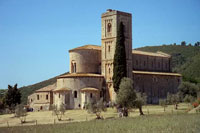 Montalcino (m 546) is located on top of a hill that overlooks the valleys of the Orcia,
the Arbia and the Ombrone. In addition to the splendid panoramas, a tour of the village
offers many mediaeval buildings to admire, beginning with the Palazzo Comunale. The
historic seat of the Priors, the Palazzo Comunale was built in an austere style consisting
on stones decorated with coats of arms. It is surmounted by a tall, slender tower and
has impressive arcades supported by pointed Gothic arches dating from the 14th and
15th centuries. Next to it there is the cathedral; built in neoclassical style on the site of
an 11th century church, the baptistery houses a collection of interesting sculptures. In
addition there are: the Sanctuary of the Madonna del Soccorso (Our Lady of Help), built
in 1600 on the site of a 15th century church close to the Porta al Corniolo; the Gothic-
Romanesque church of Sant'Agostino (Saint Augustine); the church of Sant'Egidio (also
known as the Church of the Sienese) dating from the beginning of the 14th century; and
the church of San Francesco with its square tower. The Civic Museum houses a number
of important works: Madonna with Child, and Saints John and Peter in terracotta by
della Robbia from 1507, and a 15th century della Robbia terracotta of Saint Sebastian.
The Museum of Archaeology houses finds of the Paleolithic, Neolithic, Bronze and
Iron ages, funerary urns and Etruscan pottery. In the Diocesan Museum are found:
a Romanesque crucifix from the beginning of the 13th century, parts of an altarpiece
by Luca di Tommè, and a Madonna with Child of the school of Duccio di Buoninsegna.
Montalcino also owes its fame to the renowned Brunello wine.
Montalcino (m 546) is located on top of a hill that overlooks the valleys of the Orcia,
the Arbia and the Ombrone. In addition to the splendid panoramas, a tour of the village
offers many mediaeval buildings to admire, beginning with the Palazzo Comunale. The
historic seat of the Priors, the Palazzo Comunale was built in an austere style consisting
on stones decorated with coats of arms. It is surmounted by a tall, slender tower and
has impressive arcades supported by pointed Gothic arches dating from the 14th and
15th centuries. Next to it there is the cathedral; built in neoclassical style on the site of
an 11th century church, the baptistery houses a collection of interesting sculptures. In
addition there are: the Sanctuary of the Madonna del Soccorso (Our Lady of Help), built
in 1600 on the site of a 15th century church close to the Porta al Corniolo; the Gothic-
Romanesque church of Sant'Agostino (Saint Augustine); the church of Sant'Egidio (also
known as the Church of the Sienese) dating from the beginning of the 14th century; and
the church of San Francesco with its square tower. The Civic Museum houses a number
of important works: Madonna with Child, and Saints John and Peter in terracotta by
della Robbia from 1507, and a 15th century della Robbia terracotta of Saint Sebastian.
The Museum of Archaeology houses finds of the Paleolithic, Neolithic, Bronze and
Iron ages, funerary urns and Etruscan pottery. In the Diocesan Museum are found:
a Romanesque crucifix from the beginning of the 13th century, parts of an altarpiece
by Luca di Tommè, and a Madonna with Child of the school of Duccio di Buoninsegna.
Montalcino also owes its fame to the renowned Brunello wine.
TOP
TREQUANDA
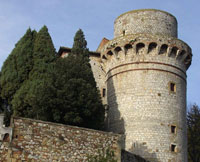 The mediaeval village of Trequanda is located in one of the most unspoiled regions
of the province of Siena. The village originated around a 13th century castle, of
which remains the majestic, crenellated tower. Trequanda is perched on the top of a
hill, nestled in beautiful, natural surroundings of woods, vineyards and olive groves.
Agriculture still thrives in this region and the production of oil, wine, honey, cheeses
and cured meats is well known for its quality and quantity. At the heart of the historic
centre is a bright and airy piazza. Overlooking the piazza is a 13th century, Romanesque
church dedicated to Saints Peter and Andrew. The building's façade of dark and light
stones produces a chromatic effect that is rare in this region. Inside there is a fresco of
the Ascension by Sodoma and a triptych by Giovanni di Paolo.
The mediaeval village of Trequanda is located in one of the most unspoiled regions
of the province of Siena. The village originated around a 13th century castle, of
which remains the majestic, crenellated tower. Trequanda is perched on the top of a
hill, nestled in beautiful, natural surroundings of woods, vineyards and olive groves.
Agriculture still thrives in this region and the production of oil, wine, honey, cheeses
and cured meats is well known for its quality and quantity. At the heart of the historic
centre is a bright and airy piazza. Overlooking the piazza is a 13th century, Romanesque
church dedicated to Saints Peter and Andrew. The building's façade of dark and light
stones produces a chromatic effect that is rare in this region. Inside there is a fresco of
the Ascension by Sodoma and a triptych by Giovanni di Paolo.
TOP